March in Woodbridge usually means two things: the mud on Litchfield Turnpike is getting out of hand, and everyone is frantically gathering receipts for tax season. If you've spent the last few weeks staring at that persistent water spot on your ceiling while calculating your refund, you're in a unique position. Most homeowners I talk to in New Haven County assume energy tax credits are reserved for people installing $40,000 solar arrays or driving electric cars.
The reality is different. Since the expansion of federal incentives, your roof replacement can actually help offset your tax bill—if you pick the right materials and keep your paperwork tighter than a new ridge vent. I've seen too many people miss out on $1,200 or more because they didn't know which specific line item to hand their accountant. We're going to look at the math, the specific Connecticut requirements, and the common pitfalls that cause the IRS to kick back your claim.
Key Takeaways
- The Energy Efficient Home Improvement Credit (Section 25C) offers up to $1,200 annually for eligible roofing components.
- Not all 'Energy Star' products qualify; materials must meet specific 'cool roof' criteria for 2026.
- Woodbridge homeowners should combine federal credits with local Energize CT rebates for maximum ROI.
- Accurate documentation, including the Manufacturer's Certification Statement, is mandatory for a successful claim.
1. The $1,200 Annual Limit Reality Check
Here is the straight talk: the government isn't paying for your entire roof. I've had homeowners call me hoping for a 30% credit on a $22,000 roof installation, which would be $6,600. That isn't how the Energy Efficient Home Improvement Credit (Section 25C) works for roofing.
While the credit is technically 30% of the material cost, it is capped at $1,200 per year for general weatherization. If you're doing a full roof replacement in Woodbridge, you'll likely hit that $1,200 ceiling immediately. But there's a strategy here. Because this is an annual cap, homeowners who spread out their home improvements—doing the roof in 2026 and windows in 2027—can maximize their total savings over time.
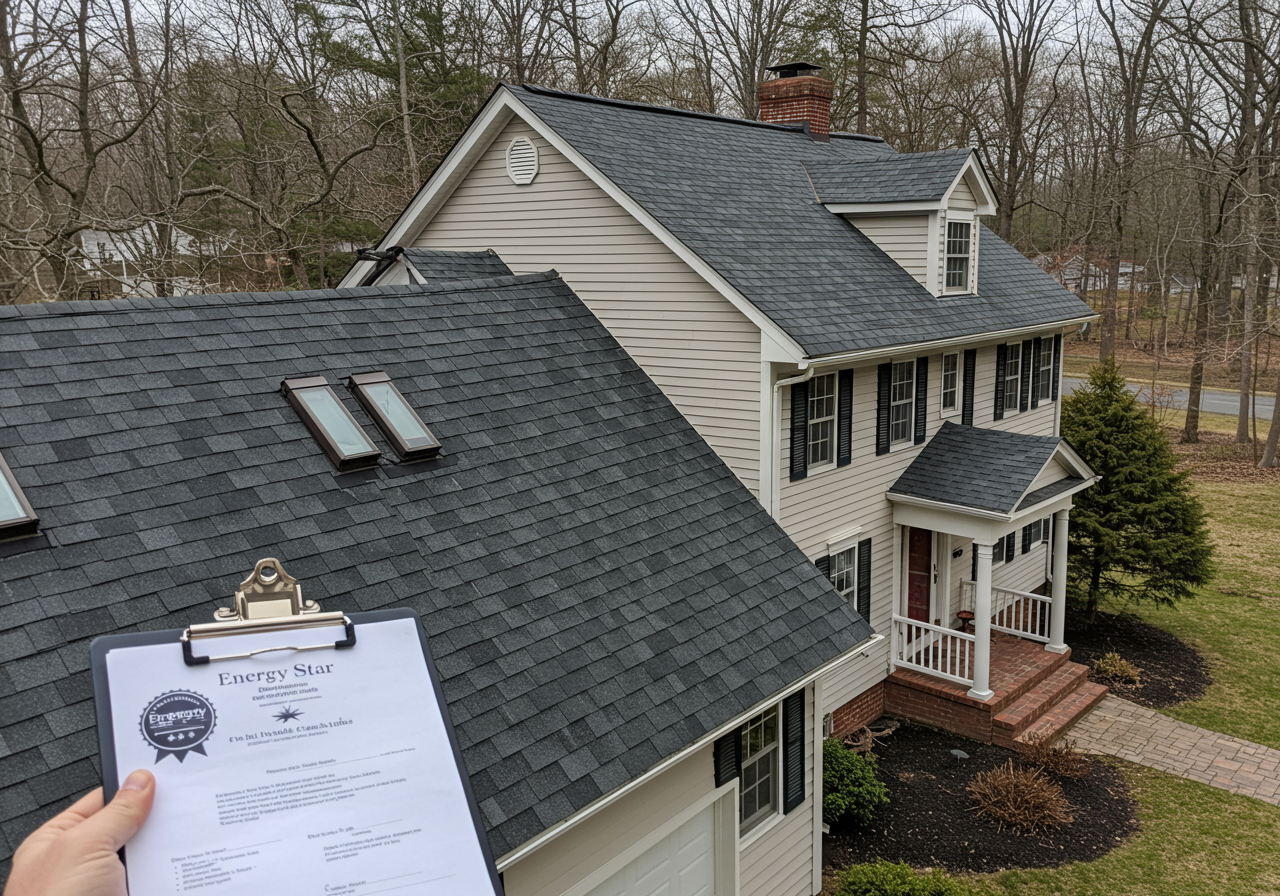
2026 Roofing Tax Credits for Woodbridge Homeowners
Understanding how to maximize your federal tax credit when replacing your roof in Connecticut.
2. Materials: It's Not Just Any Shingle
You can't just throw up a standard architectural shingle and expect the IRS to say "thank you." To qualify in 2026, your roofing material must meet specific solar reflectance and thermal emittance standards. In the trade, we call these "Cool Roofs."
For our Woodbridge climate, which swings from humid July afternoons to those biting New Haven County winters, metal roofing often wins the efficiency game. However, several manufacturers now offer asphalt shingles with cooling granules that look traditional but reflect enough UV rays to qualify.
Tax-Credit Eligible Materials: Asphalt vs. Metal
Pros
- Metal roofing offers higher reflectivity and longer lifespan (50+ years).
- Cool-shingle asphalt is more affordable upfront for most Woodbridge budgets.
- Both can qualify for the $1,200 federal credit if certified.
Cons
- Metal has a higher initial price point, often $18,000+.
- Limited color palettes for qualifying 'cool' asphalt shingles.
- DIY installations rarely qualify for full professional-grade incentives.
3. The "Manufacturer's Certification" Paper Trail
I always tell people: if a contractor can't produce a "Manufacturer's Certification Statement" for the shingles they're pitching, walk away. This isn't just a marketing flyer. It is a legal document that confirms the material meets the IRS requirements for Section 25C.
Last year, I helped a couple near the Woodbridge Country Club who were told their new roof was "energy efficient" by a fly-by-night salesperson. When tax time rolled around, they had no certification and the contractor had changed his phone number. They lost the credit. Before you sign, check our roofing cost calculator to see how the price of qualifying materials stacks up against standard ones—the difference is often smaller than the tax credit itself.
4. Why Woodbridge Building Permits Matter for Your Taxes
According to Connecticut's home improvement laws, every major roof job in Woodbridge requires a permit. You might wonder what a town permit has to do with a federal tax credit. Everything.
If the IRS ever audits your energy credit claim, they will look for proof of installation. A closed building permit from the Town of Woodbridge is the ultimate "proof of life" for your project. It shows the date of completion and the materials used. I recommend everyone verify their contractor's license via the state portal before even pulling that permit. A licensed pro will handle the paperwork; a "trunk slammer" will leave you holding the bag.
Woodbridge Tip
5. The Energize CT Connection
Don't stop at the federal level. Woodbridge residents are often eligible for additional perks through Energize Connecticut. While these are often rebates rather than tax credits, they stack.
For instance, if you are doing minor roof repairs or adding attic insulation alongside your roofing project, UI or Eversource might offer instant rebates. I've seen homeowners shave an extra $400 to $900 off their total project cost by timing their roof work with a Home Energy Solutions (HES) audit. It's about looking at the house as a system, not just a pile of shingles.
Estimated 2026 Savings Breakdown (Woodbridge)
6. Negotiation Script: Don't Pay the "Credit Tax"
Here is a Dana Jackson special: don't tell the contractor you're gunning for the tax credit until after you get the base quote. Some less-than-honest outfits will see that $1,200 credit and magically find a way to add $1,200 to their labor estimate.
Instead, ask for a line-item breakdown. Say this: "I'd like to see the material cost separated from the labor and disposal fees." The tax credit only applies to the material cost (and sometimes specifically related components), so you need that number clear and clean. If they balk at showing the math, find someone else.
The 'Free Roof' Scam
7. Timing Your Claim: The 2026 Strategy
If you install your roof in March 2026, you won't actually see that credit until you file your taxes in early 2027. You need to budget for the full out-of-pocket cost now.
I've looked at historical storm data for New Haven County and March is often when we see the "final straw" for aging roofs after a long winter of freeze-thaw cycles. Getting your project done now, before the summer rush, usually gets you better labor rates and ensures your paperwork is ready long before next year's tax deadline.
Confirm the material meets 2026 'Cool Roof' reflectivity standards.
Check the Manufacturer's Certification Statement for specific solar reflectance index (SRI) values required by the IRS.
Obtain the Manufacturer's Certification Statement from your contractor.
This document must be kept with your tax records and proves the materials qualify for the credit.
Save the final itemized invoice showing material vs. labor costs.
Only material costs qualify for the credit, so you need a clear breakdown.
Ensure the Woodbridge building permit is closed and filed.
The permit serves as proof of installation date and completion for IRS purposes.
Provide IRS Form 5695 to your tax preparer.
This form calculates your energy credit and must be included with your tax return.
Get Your Free Roof Quote Today
Connect with verified CT pros in minutes and see how tax credits can reduce your project cost.
No credit card required • Free to use
Conclusion
Getting a new roof in Woodbridge is a major investment, but the 2026 tax landscape makes it a little easier to swallow. Just remember: the $1,200 federal credit is a material-based incentive, not a blank check. Keep your receipts, verify your contractor's license, and always—always—get the math in writing before a single shingle is torn off. If you're ready to see how the numbers look for your specific Woodbridge home, get an instant estimate from a verified pro through ZikQuote and start your paperwork on the right foot.
FAQ

About Dana Jackson
Verified ExpertDana Jackson is a Homeowner Advocate & Cost Analyst who helps Connecticut families navigate the financial aspects of roofing projects. She specializes in finding the best value and avoiding common pricing pitfalls.